Chapter Overview

Key skills you will develop by the end of Chapter 3: Variations, Heredity and Cell Division.

Define variation and explain why members of the same species differ
Distinguish between continuous, discontinuous and acquired variation
Explain how organisms are adapted to their environment (polar bear, cactus, camel)
Describe how a beneficial variation becomes an adaptation by natural selection
Explain heredity, genes and alleles, and dominant vs recessive characteristics
Describe the structure of DNA — the double helix, nucleotides and bases A, T, C, G
Compare mitosis and meiosis and sequence the stages of cell division

General Science: Variations, Heredity & Cell Division

Complete chapter notes with all diagrams, variation types, genetics, DNA, mitosis and meiosis: PDF format

Download PDF

Please note: The content on this page is a concise preview of the chapter. The complete notes, including all detailed explanations, diagrams, worked examples, and exam-style questions, are available in the PDF. We strongly encourage you to download the PDF for the full learning material.

Chapter Diagrams

High-quality illustrated diagrams from W.H. Academy Class 8 Science notes.
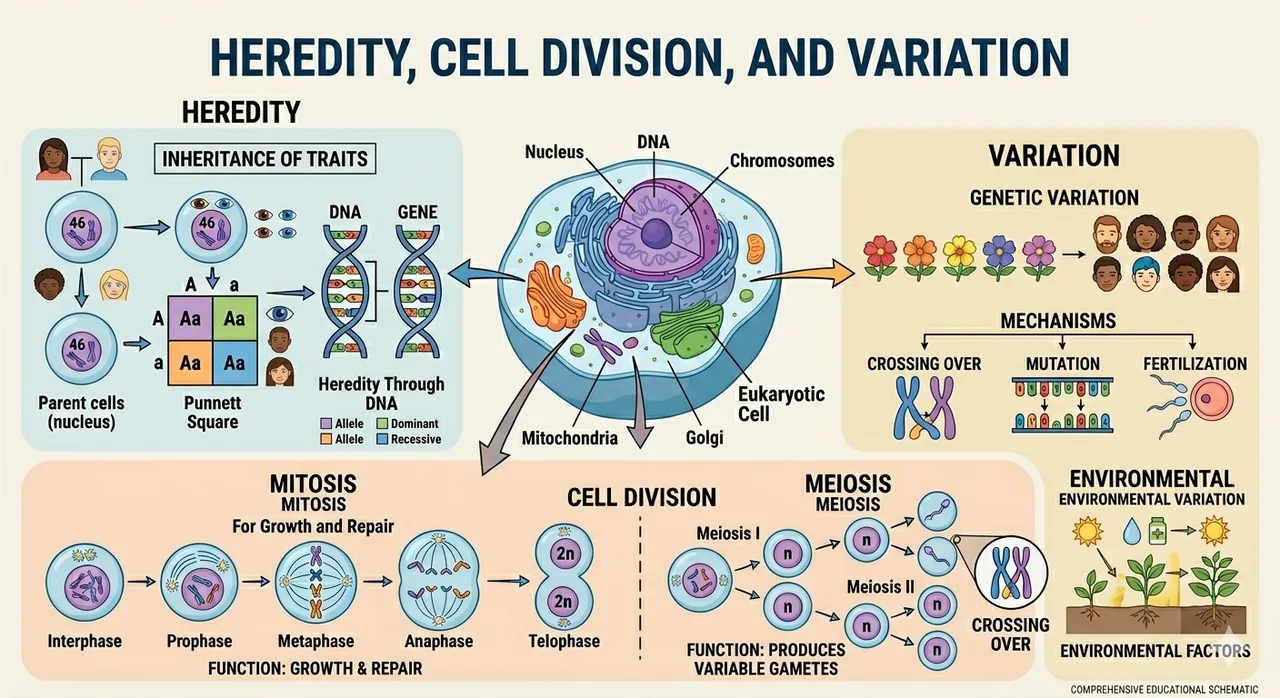
Heredity variation and cell division overview class 8 science chapter 3
Fig 1: Chapter Overview — Heredity, Variation & Cell Division
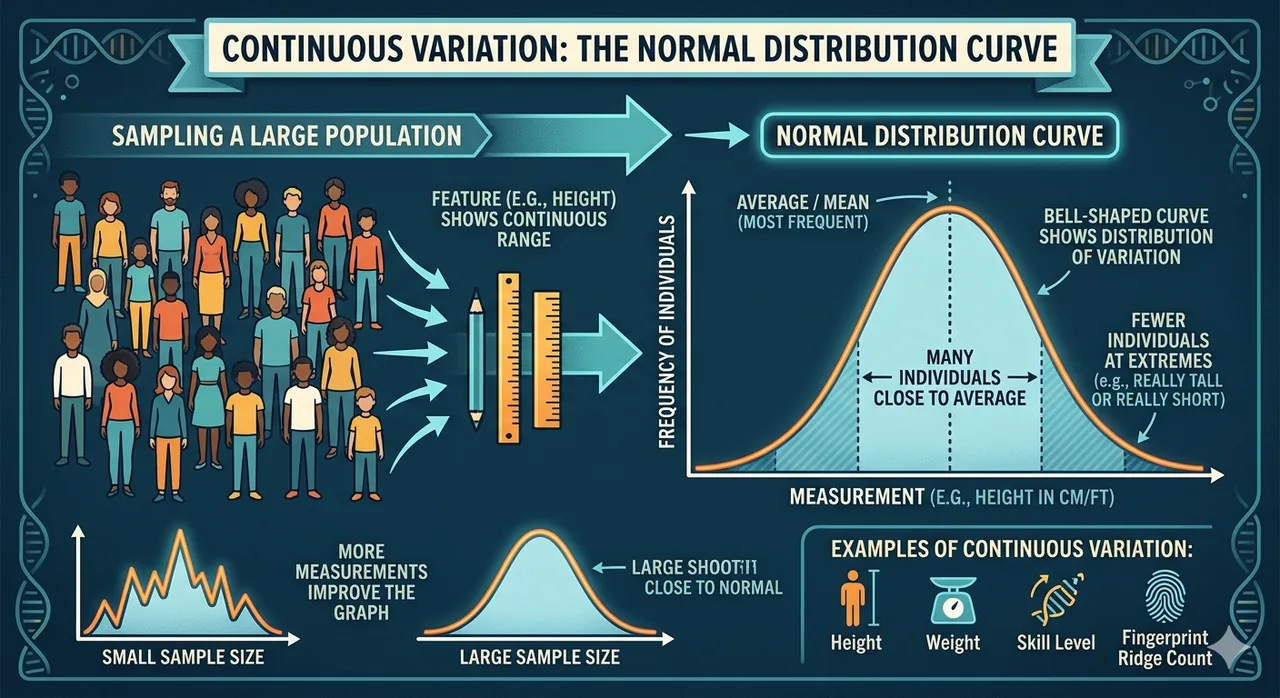
Continuous variation normal distribution bell curve height class 8 science
Fig 2: Continuous Variation — The Normal Distribution Curve
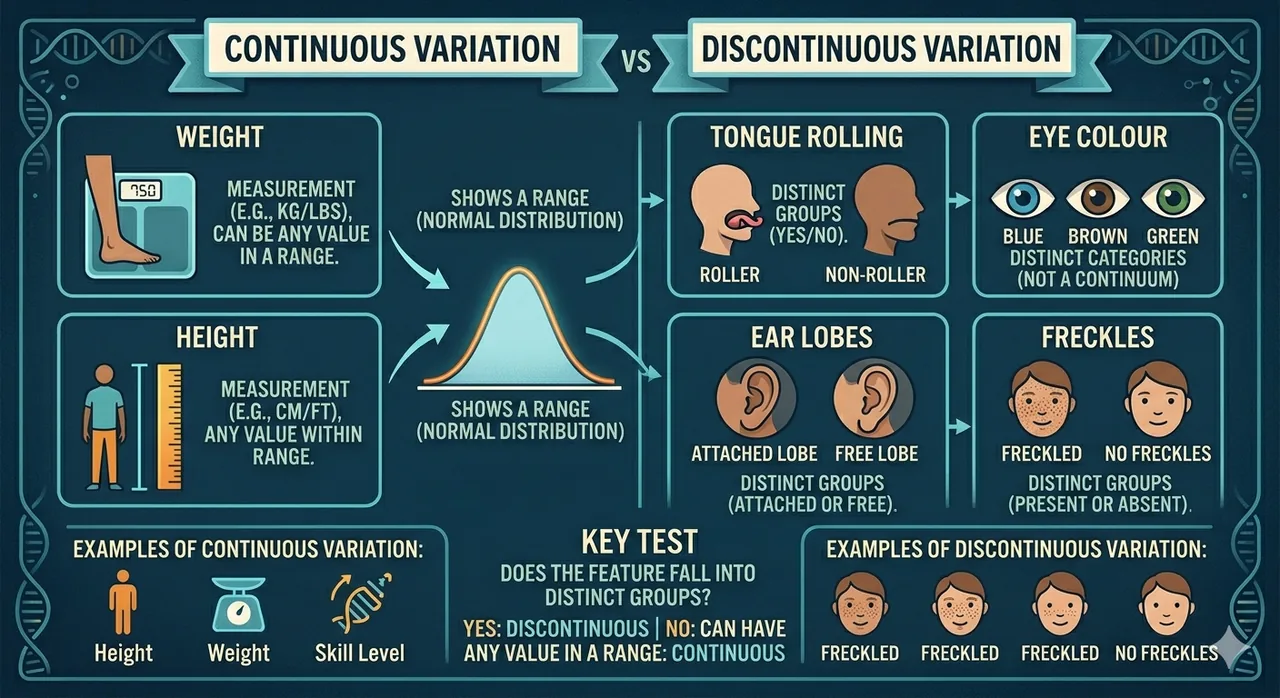
Continuous vs discontinuous variation weight height tongue rolling eye colour class 8
Fig 3: Continuous vs Discontinuous Variation
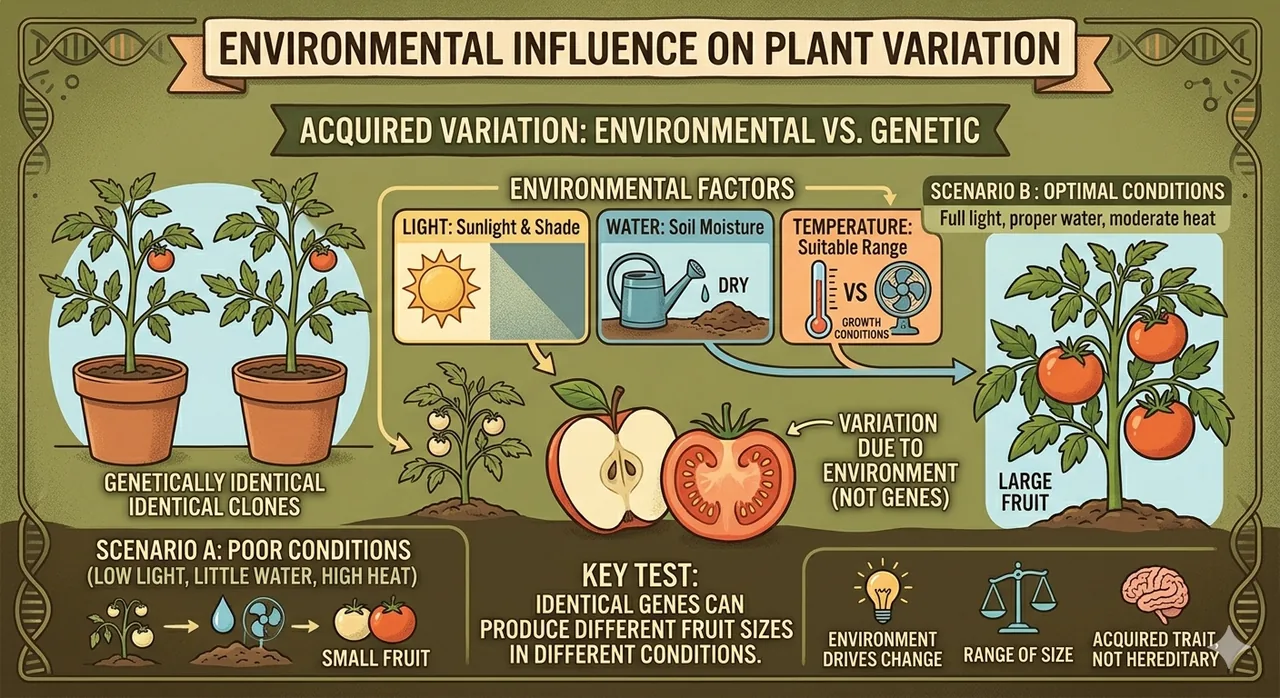
Environmental influence acquired variation in plants class 8 science
Fig 4: Environmental Influence on Plant Variation (Acquired)
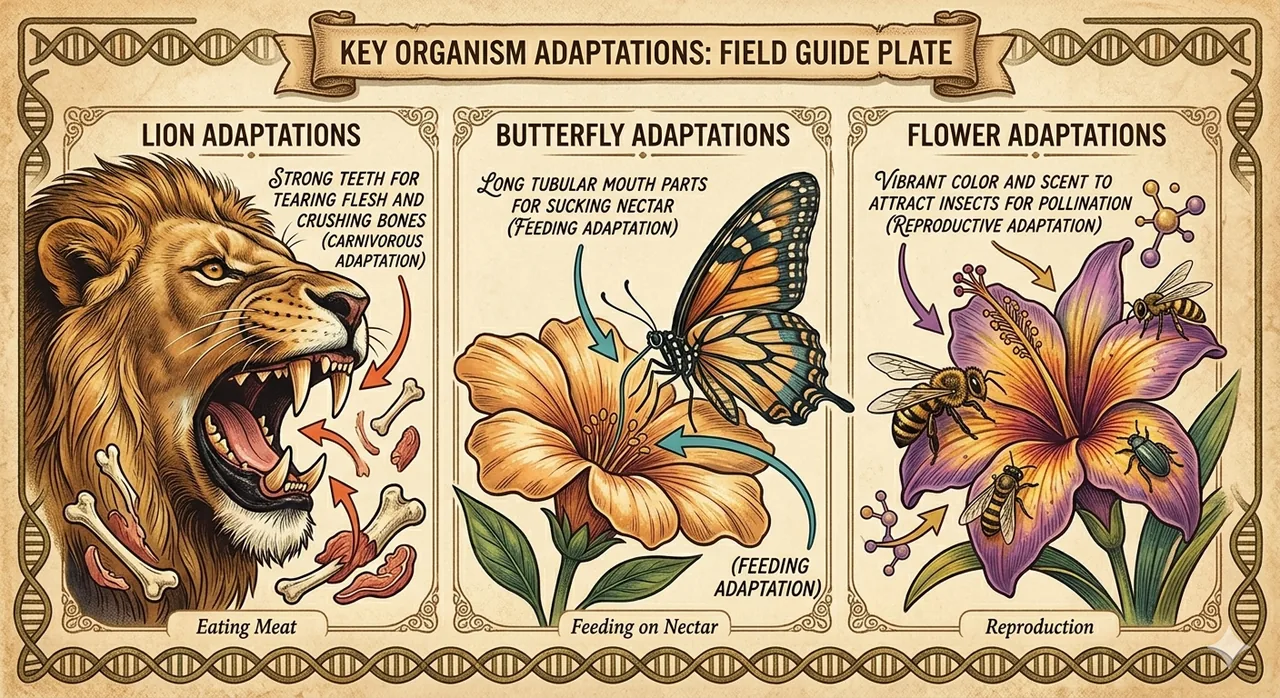
Lion butterfly flower adaptations field guide class 8 science
Fig 5: Adaptations of the Lion, Butterfly and Flower
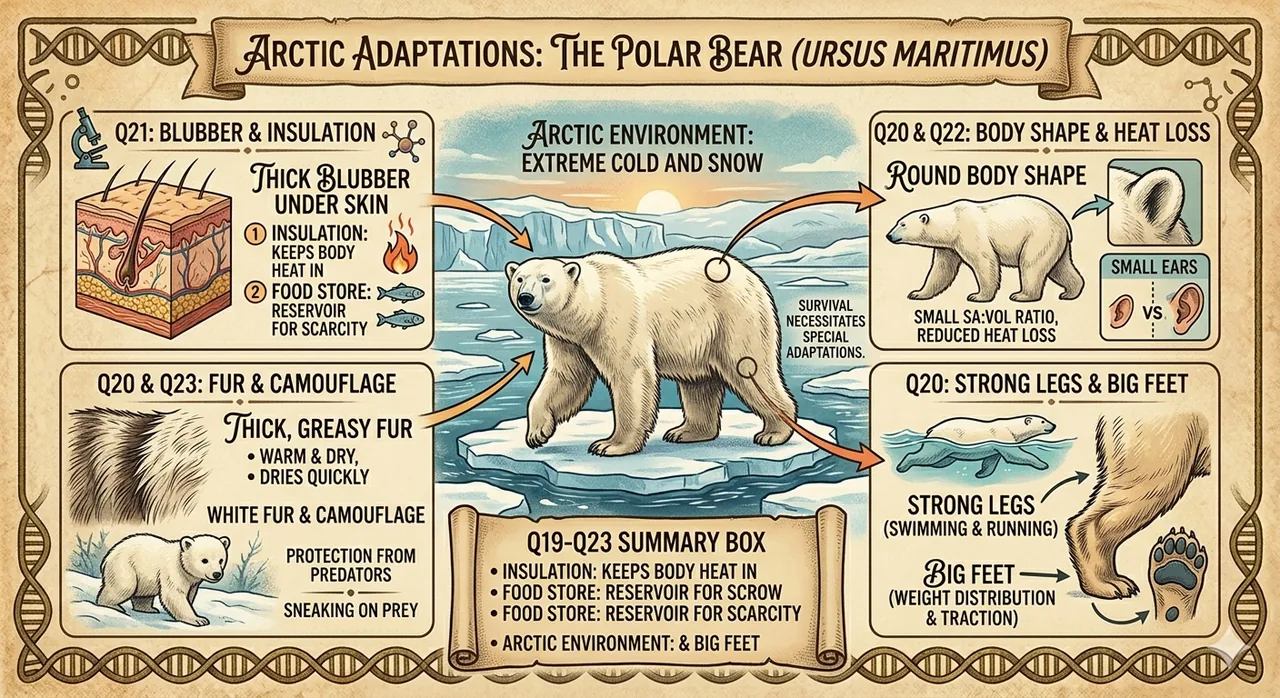
Polar bear arctic adaptations blubber fur camouflage class 8 science APSACS
Fig 6: Arctic Adaptations — The Polar Bear
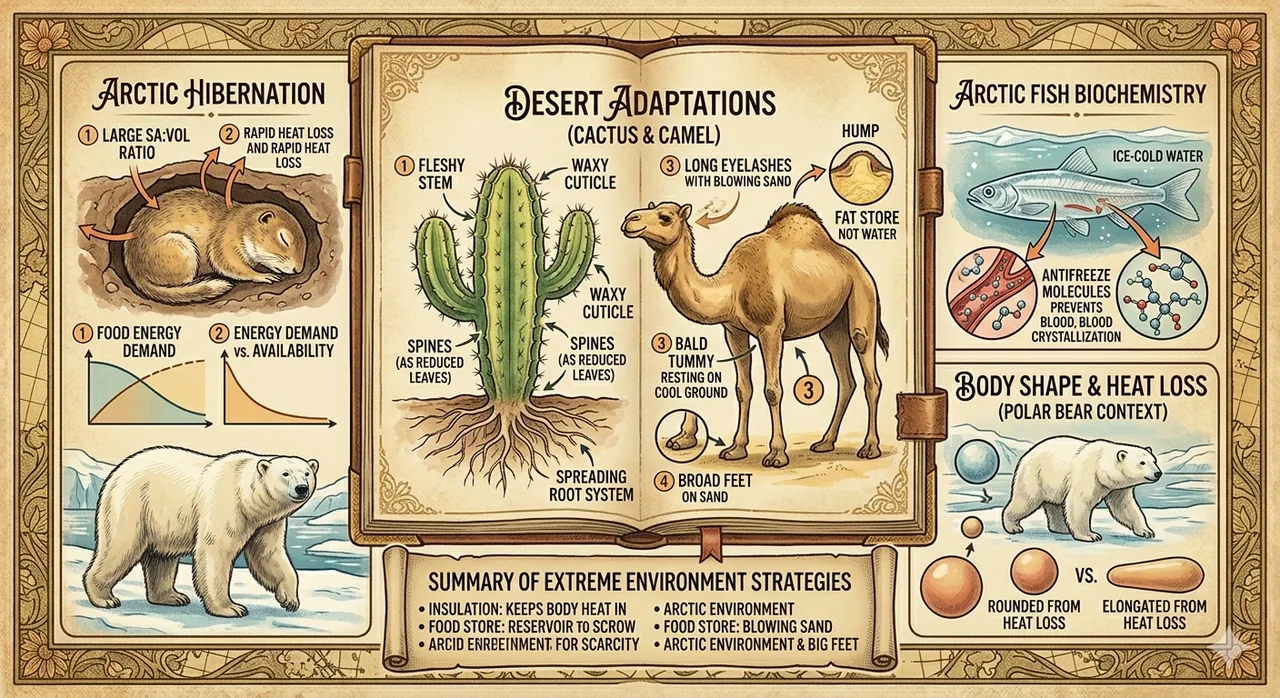
Desert adaptations cactus camel arctic hibernation fish antifreeze class 8 science
Fig 7: Desert Adaptations, Hibernation & Arctic Fish
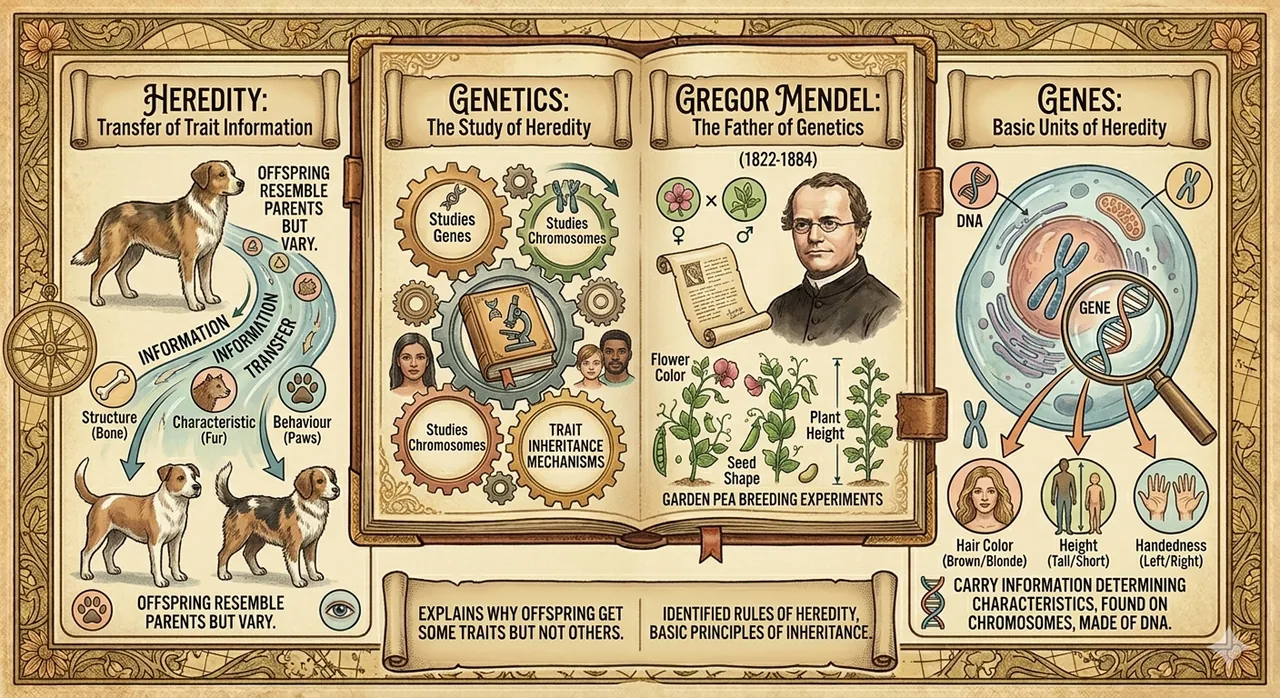
Heredity genetics Gregor Mendel genes class 8 science
Fig 8: Heredity, Genetics, Gregor Mendel & Genes
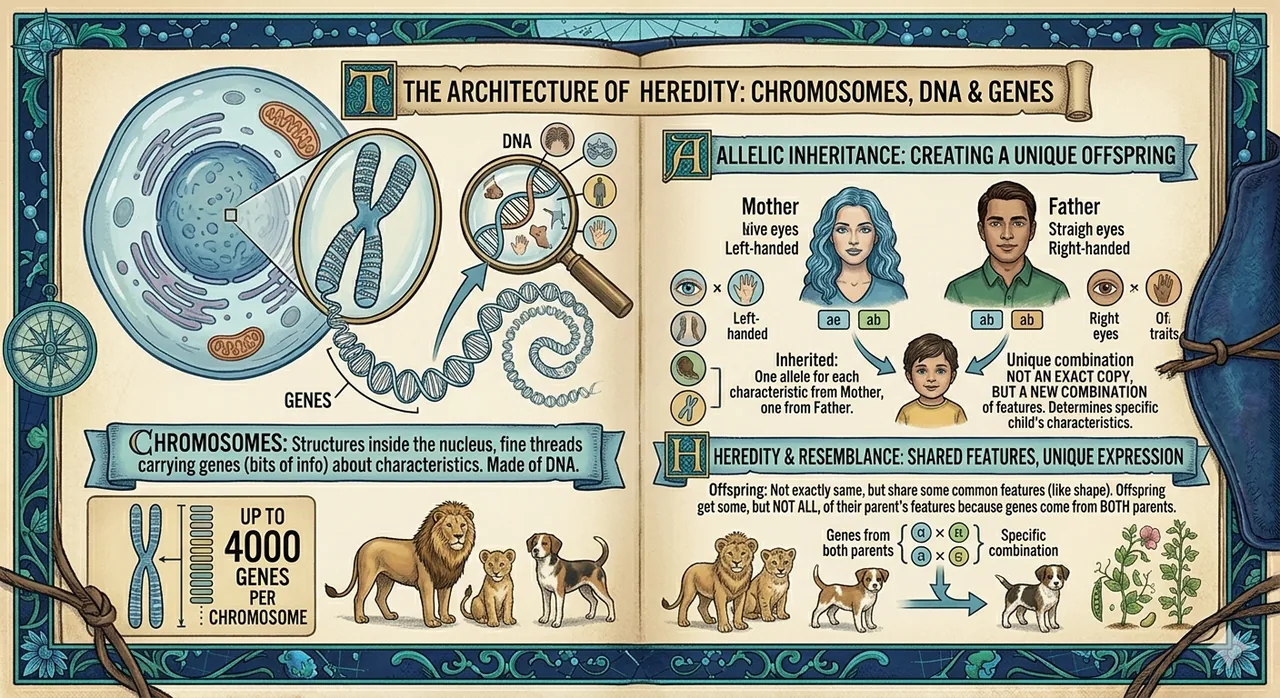
Chromosomes DNA genes architecture of heredity class 8 science FBISE
Fig 9: Chromosomes, DNA and Genes
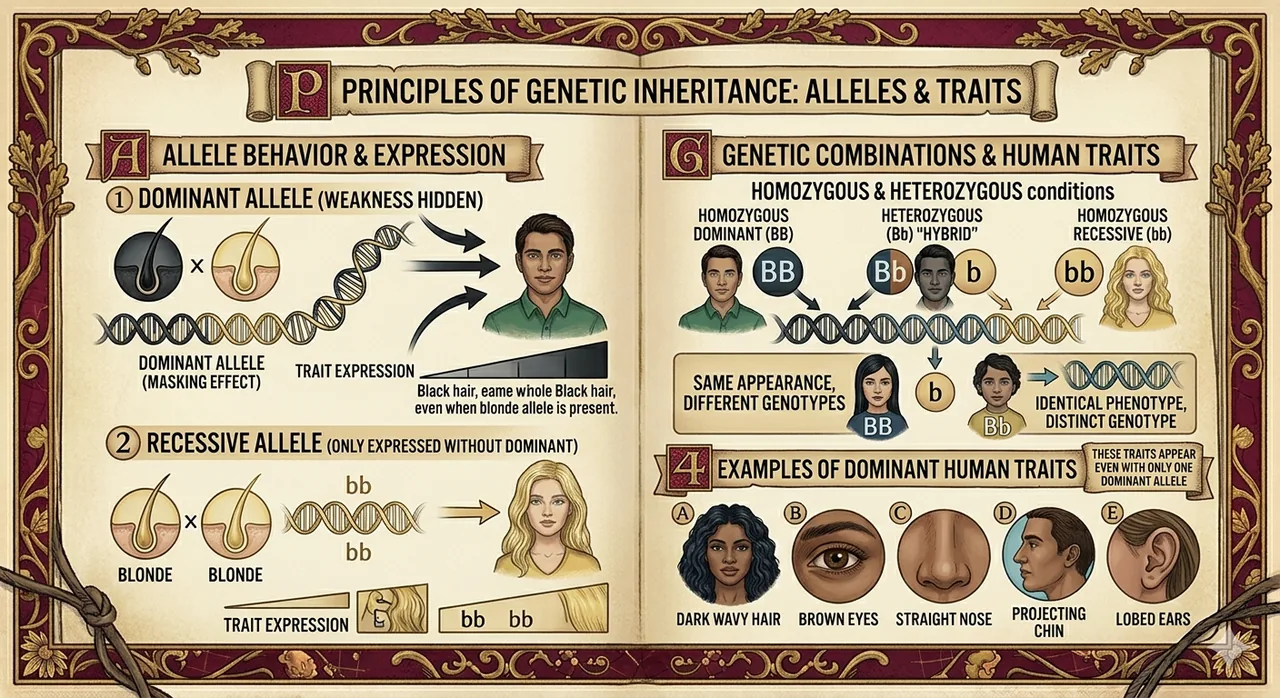
Alleles dominant recessive traits genetic inheritance class 8 science
Fig 10: Alleles, Dominant & Recessive Traits
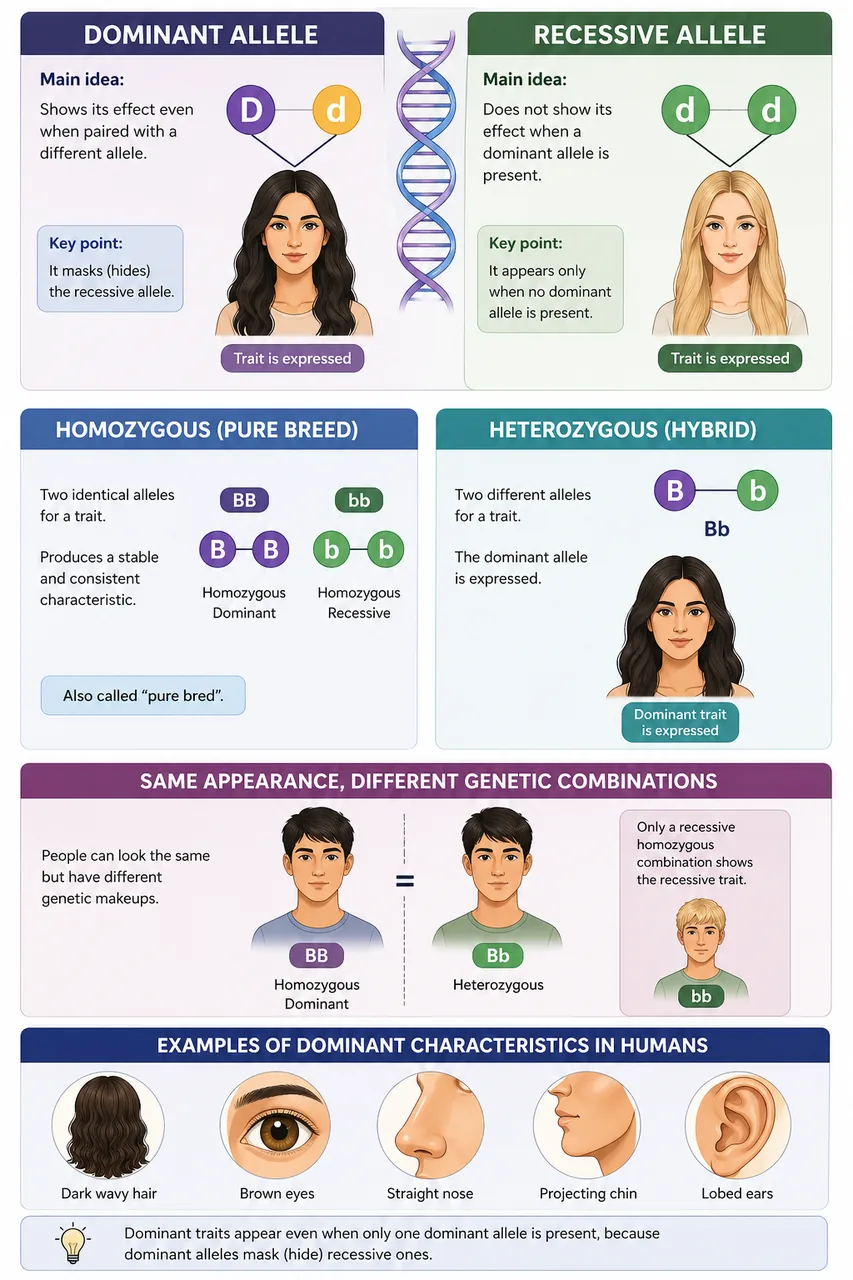
Dominant recessive allele homozygous heterozygous class 8 science
Fig 11: Dominant vs Recessive, Homozygous vs Heterozygous
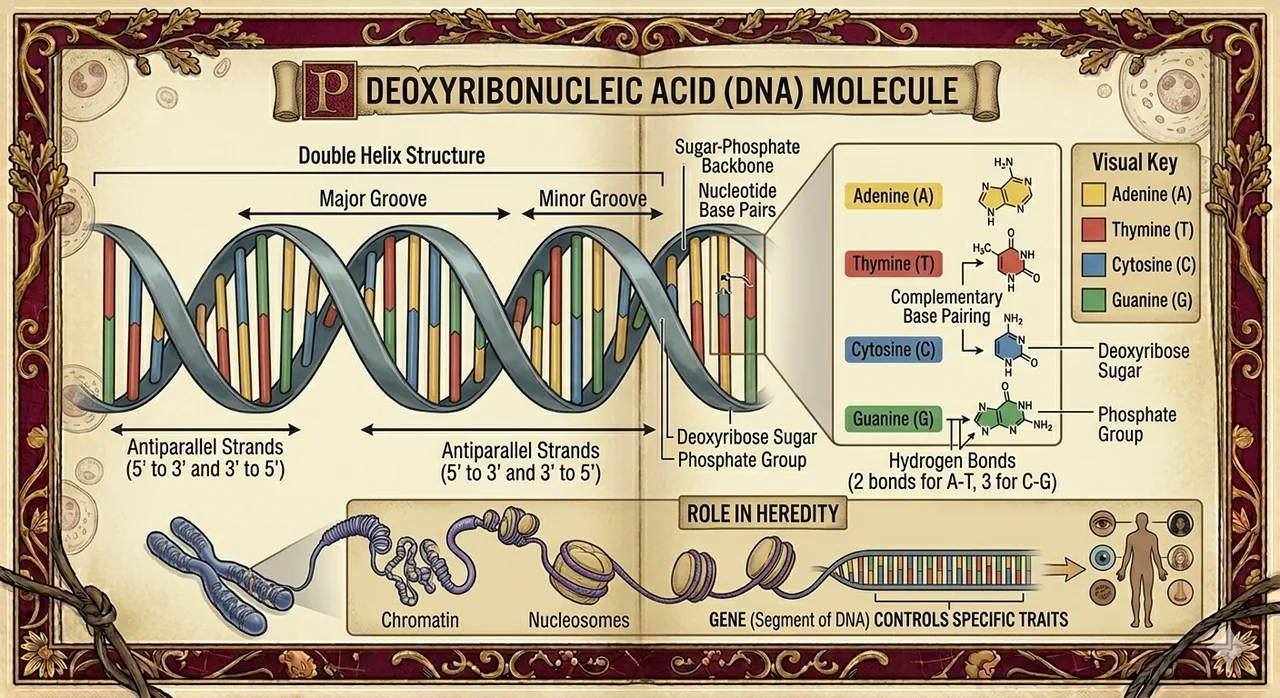
DNA molecule double helix structure bases backbone class 8 science FBISE
Fig 12: The DNA Molecule — The Double Helix
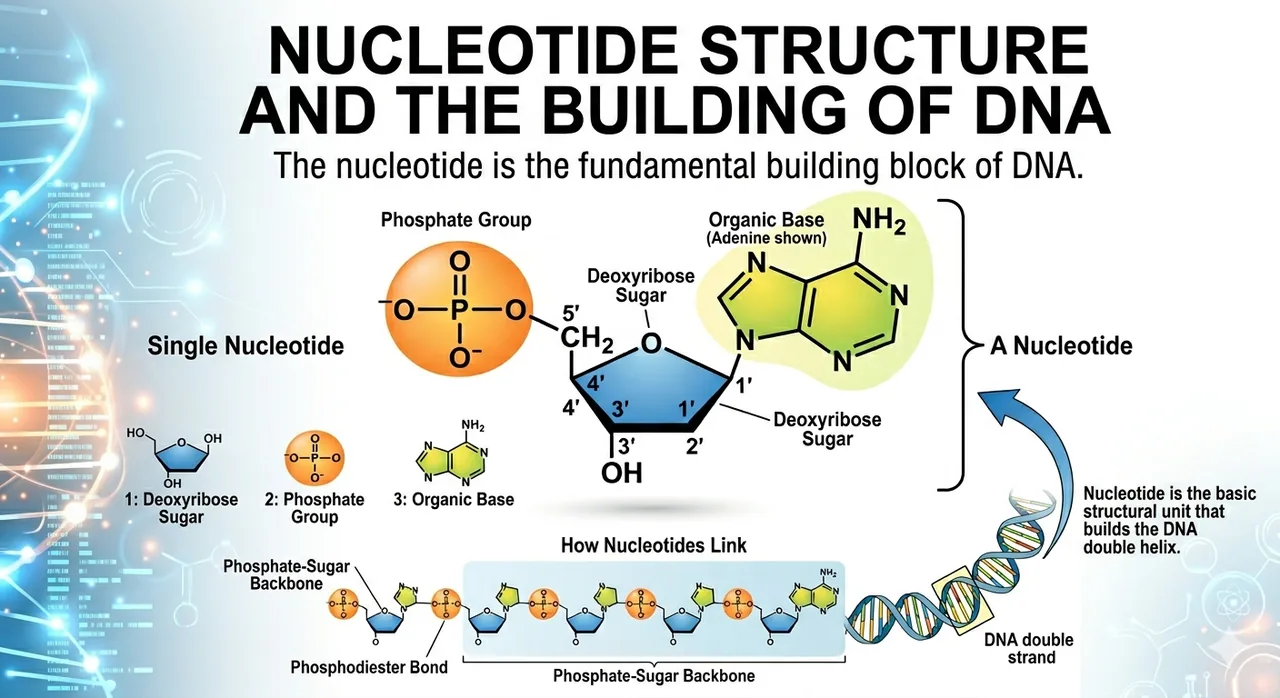
Nucleotide structure phosphate sugar base building of DNA class 8 science
Fig 13: Nucleotide Structure — Building Block of DNA
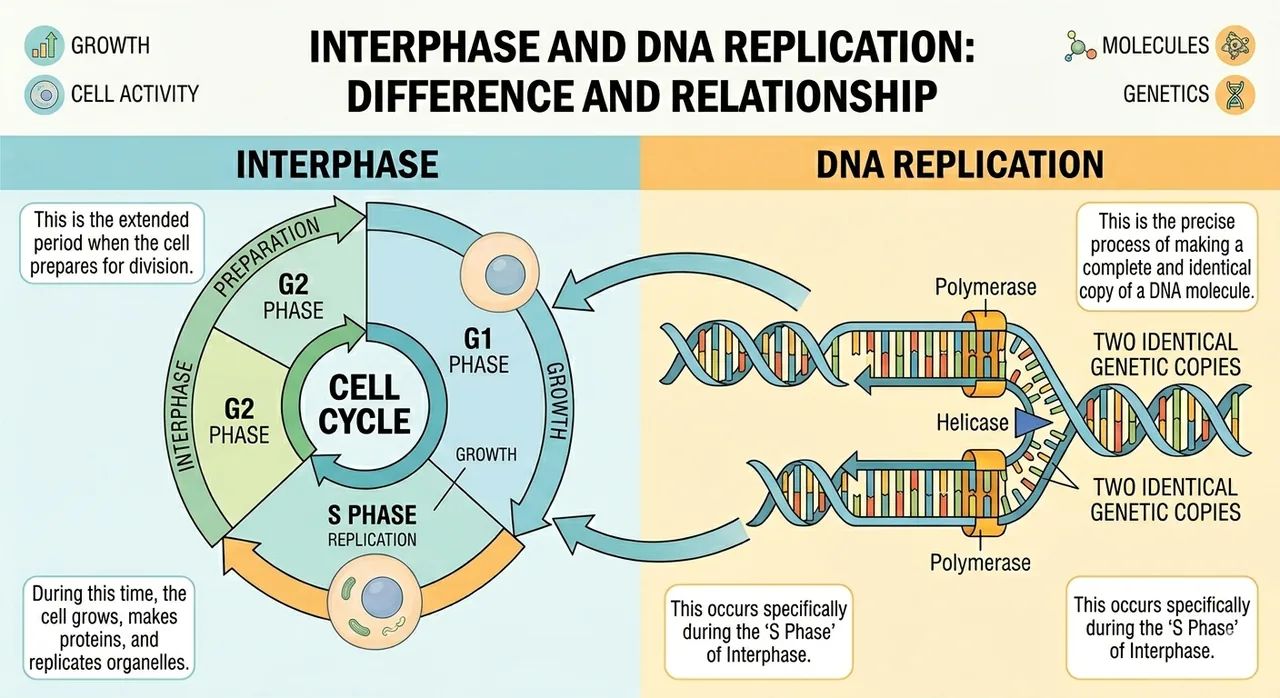
Interphase DNA replication cell cycle G1 S G2 phase class 8 science
Fig 14: Interphase and DNA Replication
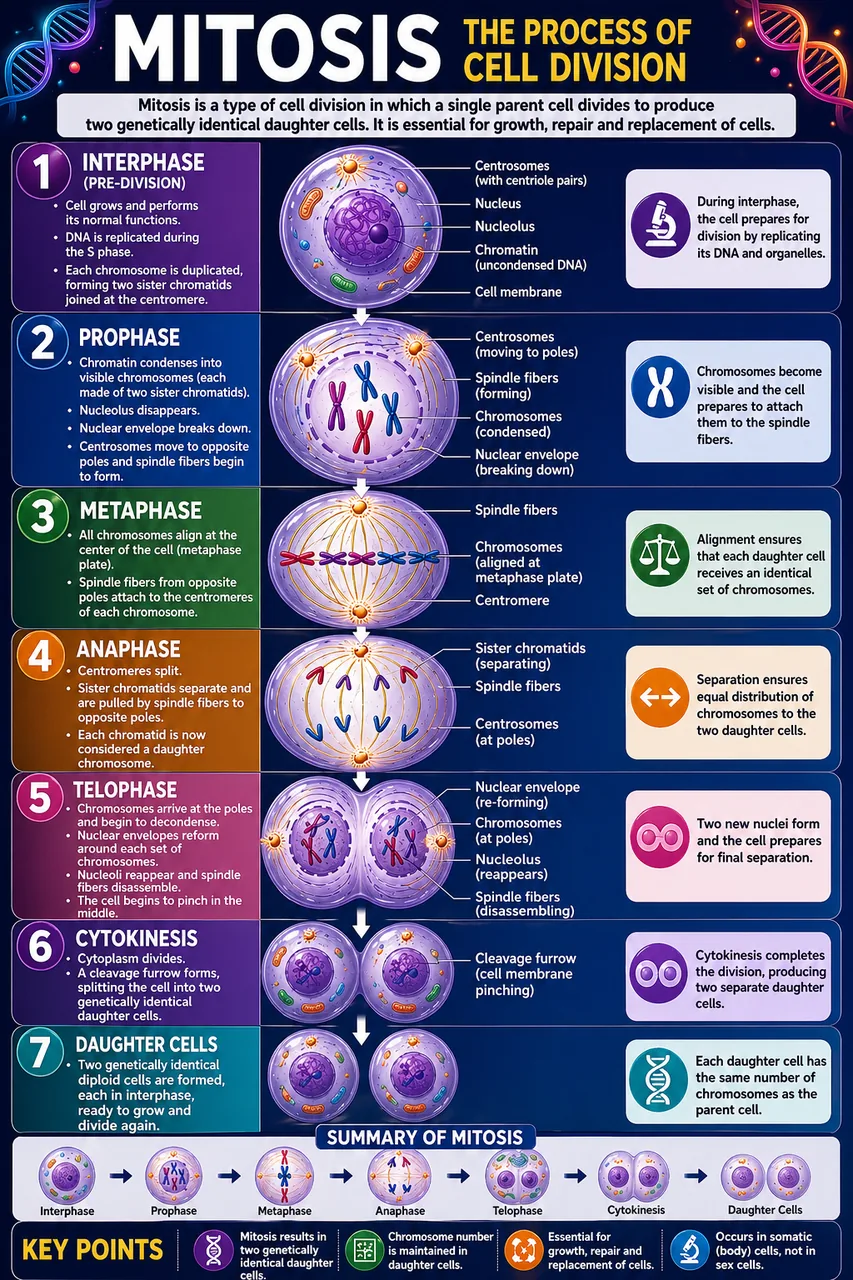
Mitosis stages prophase metaphase anaphase telophase cytokinesis class 8 science
Fig 15: Mitosis — The Process of Cell Division
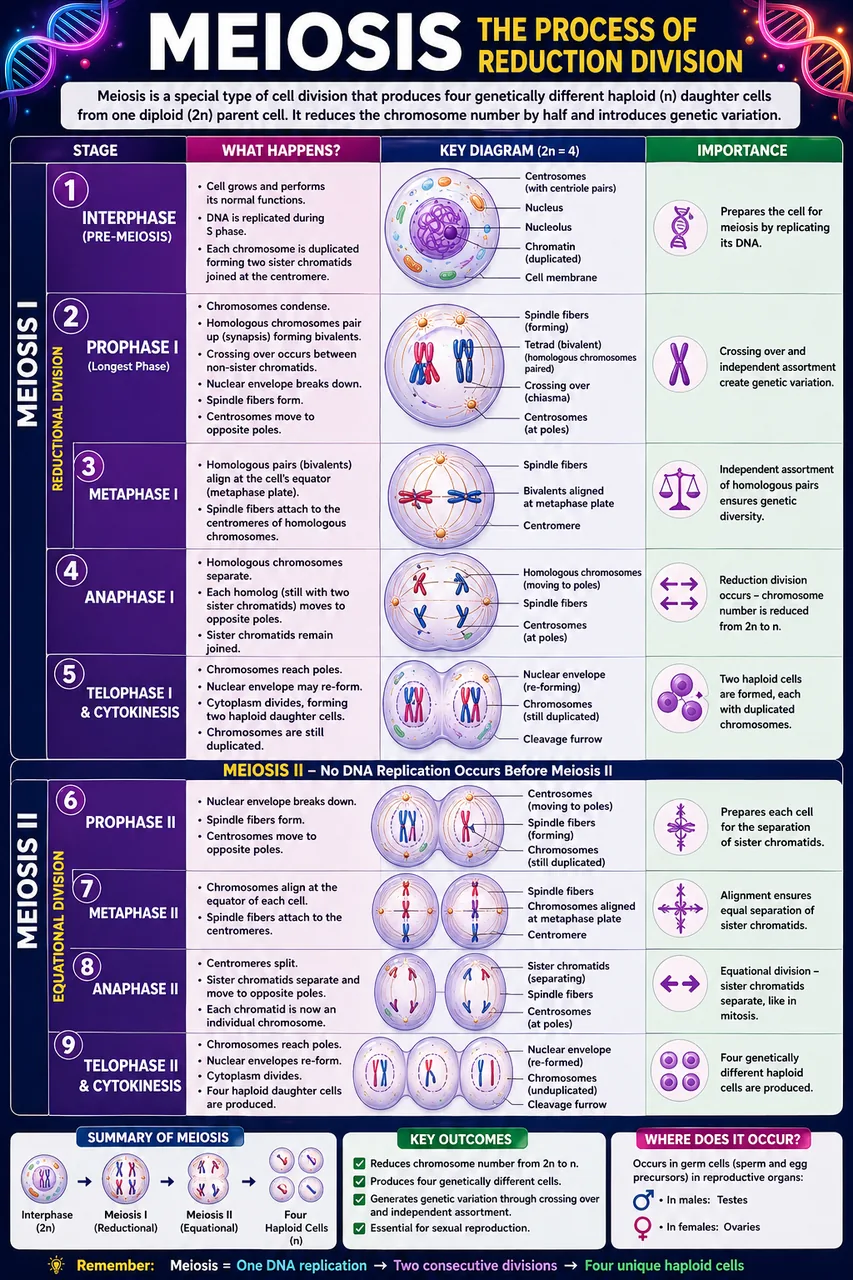
Meiosis reduction division gametes half chromosome number class 8 science
Fig 16: Meiosis — The Process of Reduction Division
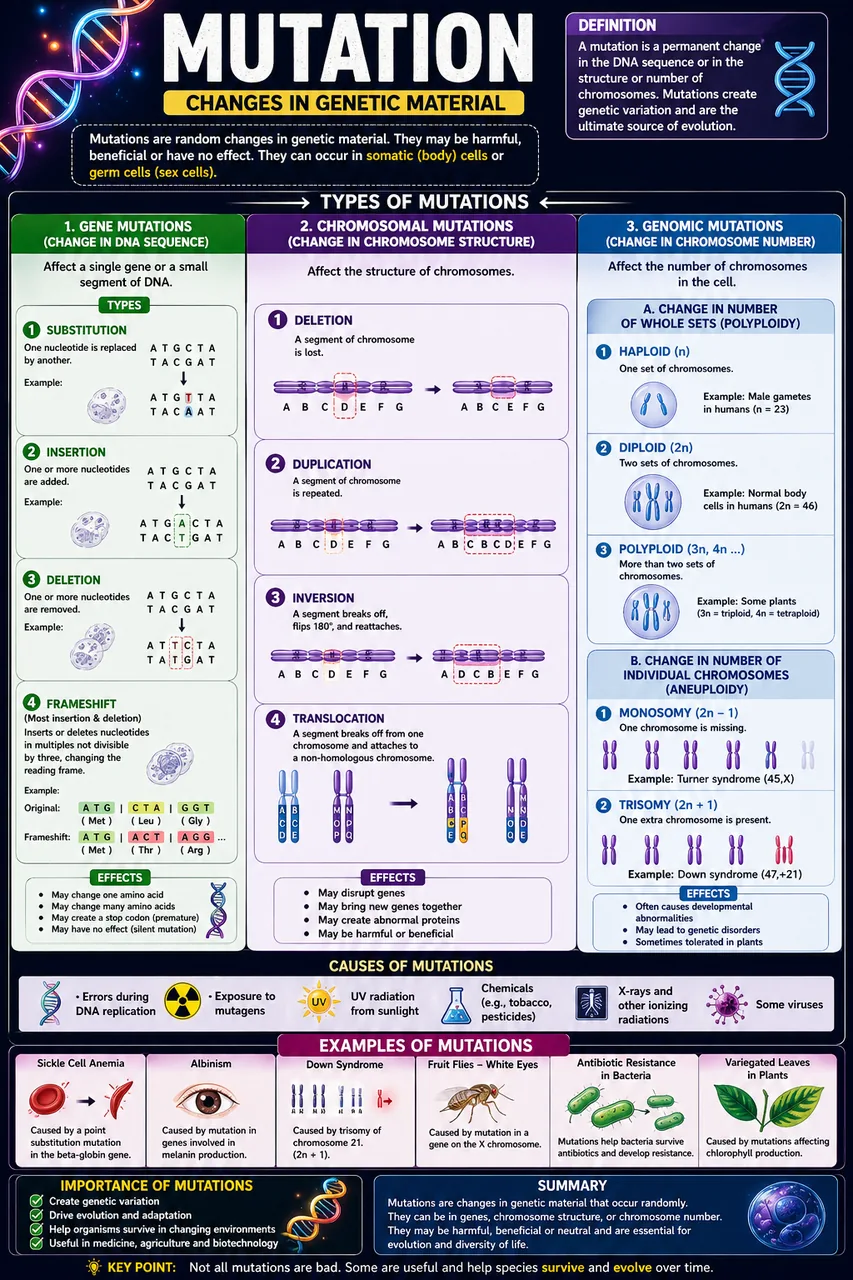
Mutation types single gene chromosome mutation class 8 science
Fig 17: Mutations — Types and Effects

Homo Sapiens and Variations

What variation is, why it matters, and where it comes from.

Introduction — Homo Sapiens & Variations

1. To which species do human beings belong?
• What is the scientific name of human beings?• What species is Homo sapiens?• What does the scientific name of humans tell us about them?• What is the scientific name of the human species?• What does the scientific name of humans tell us?
Human beings belong to the species called Homo sapiens. All humans, despite their differences, belong to one type or species of animals. Scientists call this species Homo sapiens.
2. What are variations?
• Define variation in biology.• What is meant by variation in a species?• Why do scientists say there is variation in every species?• Why do people belonging to the same species look different from each other?• Define the term variation in biology.• What is the scientific meaning of variation?
Variations are the small differences between individual members of the same species. Every species has characteristic features of shape and structure by which it can be recognized, but individual members show slight differences. These differences are called variations. People, like all living things, inherit characteristics from both parents, some from the mother and some from the father, which is why variations exist.
3. Why are variations important for a species?
• How have variations helped Homo sapiens survive?• What is the significance of variation in living things?• Why are variations described as very important?
Variations are very important because they have helped Homo sapiens in particular to evolve over millions of years into a very successful species. Variations allow some individuals to survive better in changing environments and pass their successful traits to their offspring.
4. From where do people get their characteristics?
• How do organisms inherit their characteristics?• Why do children resemble their parents?• Where do variations in humans come from?
People, like all living things, inherit their characteristics from their parents. Some characteristics come from the mother and some come from the father. This inheritance from both parents is why there are variations in every species of plants and animals.
5. What is the world's tallest and shortest known human height?
• Give two facts about extreme human height variation.• What is the world's tallest known human height? What is the shortest?
The world's tallest known human being measured 272 cm tall. The shortest ever human being measured a height of just 54.6 cm. These extremes demonstrate continuous variation in height among Homo sapiens.
6. Why do people look different even though they all belong to the same species?
• What causes differences between people of the same species?• How can people be similar and yet different at the same time?• Explain why humans have both similarities and differences.
People belong to the same species so they share the same general body shape and similar facial features. However, they look different because they inherit different characteristics from their parents. These small differences are called variations.

Types of Variation

Continuous, discontinuous and acquired variation.

Types Of Variation — Continuous, Discontinuous & Acquired

1. What is continuous variation? Define it.
• What type of variation does height represent?• Give examples of continuous variation in humans.• What makes a feature an example of continuous variation?• Why are height and weight called continuous variations?• What is continuous variation?• What makes a characteristic an example of continuous variation?• Why are height and weight continuous variations?
Continuous variation is a type of variation in which characteristics show a smooth range of values between two limits, without clear categories. Features like height and weight are examples because they can take many values within a range and change gradually.
2. What is discontinuous variation? Define it.
• Give examples of discontinuous variation in humans.• What makes a feature an example of discontinuous variation?• How is discontinuous variation different from continuous variation?• Why is gender an example of discontinuous variation?• What is discontinuous variation?• What makes a characteristic an example of discontinuous variation?
Discontinuous variation is a type of variation in which characteristics fall into clear, separate categories with no intermediate (middle) values. A person either has a trait or does not. Examples include gender, tongue rolling, eye color, earlobe type, and freckles. It is usually controlled by genes and shows no gradual change, unlike continuous variation which has a range of values.
3. What is acquired variation? Define it.
• How can the environment cause variation?• Give two examples of acquired variation.• Why is a tan an example of acquired variation?• How do acquired variation differ from inherited variation?• What is acquired variation?• Define acquired variation.
Acquired variation is variation that develops because of what an organism does or experiences during its lifetime, it is not inherited from parents. For example, height and weight can be affected by diet. Exposure to sunlight affects skin colour regardless of its original colour. This is called acquired variation because people acquire these characteristics as a result of what they do during their lives.
4. What is a normal distribution curve?
• Describe the shape of a normal distribution curve.• Why does height produce a bell-shaped graph?• What does the middle of the curve represent?• Why is the normal distribution curve described as bell-shaped?• Why does height follow a normal distribution curve?• What does the middle of a normal distribution curve represent?• Why is the normal distribution curve bell-shaped?
A normal distribution curve is a bell-shaped graph that shows how a continuously varying feature (like height) is distributed in a large population. The more people you measure, the better the graph will be. The average height is shown in the middle of the curve, most people have a height close to this average. Only a few people are really short or really tall, giving the graph its bell shape.
5. What is tongue rolling? Is it inherited or acquired?
• What does "dominant characteristic" mean? Give an example.• Why are there more tongue rollers than non-tongue rollers?
Tongue rolling is the ability to roll the tongue into a tube shape. It is an inherited discontinuous variation; you are either a tongue roller or a non-roller. Tongue rolling is called a dominant characteristic. There are more tongue rollers than non-tongue rollers in the human population because the allele for tongue rolling is dominant; it is expressed even when only one copy is present.
6. Classify: weight, tongue rolling, height, eye colour, ear lobes, freckles as continuous or discontinuous?
• Which of the following are continuous and which discontinuous: weight, tongue rolling, height, eye colour, ear lobes, freckles?• Classify the following as continuous or discontinuous variation: weight, tongue rolling, height, eye colour, ear lobes, freckles.• Which of the following are continuous and which are discontinuous: weight, tongue rolling, height, eye colour, ear lobes, freckles?
Continuous variation: Weight (any value on a scale), Height (any value in a range).
Discontinuous variation: Tongue rolling (either you can or cannot), Eye colour (distinct categories), Ear lobes (either present or absent), Freckles (either you have them or do not).
Key test: If the feature can have any value in a range, it is continuous; if it falls into distinct groups, it is discontinuous.
7. How can the environment affect variation in plants?
• In plants, what factors can affect the size of fruit?• Give an example of acquired variation in plants.• In plants, what environmental factors can affect the size of fruit?• How can environment affect variation in plants?
In plants, the amount of sunlight, water, and suitable temperature can affect the size of fruit. This is acquired variation, the variation results from environmental conditions, not from genes. Two plants with identical genes can produce different sizes of fruit if they grow in different environmental conditions.
8. What does it mean when we say "there is variation in your class"?
• How would you demonstrate variation among classmates?• What characteristics can vary between classmates?• What does "There is variation in your class" mean?• What does it mean to say a class shows variation?• How would you describe and measure variation among your classmates?
Saying there is variation in a class means students are not all identical because they show differences in characteristics such as height, hair colour, eye colour, shoe size, handedness, and presence of freckles or ear lobes. These differences exist because each student has a unique combination of genes inherited from their parents. This variation is the same kind found in all species.
9. How can surroundings affect variation?
• What effect does food have on variation?• Explain how activities can affect variation.• How does environment cause variation in an individual?
Our surroundings or activities can affect variation. Height and weight can be affected by what sort of food we eat or how much we eat. Exposure to sunlight affects the colour of our skin no matter what colour it is to begin with. This is acquired variation because individuals acquire these characteristics through their experiences, not through inheritance.
10. What does "dominant characteristic" mean? Give an example.
• Why is tongue rolling called a dominant characteristic?• Is tongue rolling inherited? Explain.
A dominant characteristic is one that appears more frequently in a population because the allele for it is dominant. Tongue rolling is called a dominant characteristic. There are more tongue rollers than non-tongue rollers in the human population because the dominant allele for tongue rolling is expressed even when only one copy is present.

Adaptations for Survival

How organisms are suited to their environment — polar bear, cactus, camel.

Adaptations

1. What is an adaptation? Define it.
• What are adaptations in living things?• How do adaptations help organisms survive?• Give the biological definition of adaptation.• What is an adaptation?• Define adaptation in biology.• Why do living things need adaptations?
An adaptation is a physical or behavioural characteristic that makes an organism better suited to the environment it lives in. Every living thing is adapted to live in a certain way. Adaptations help organisms survive, find food, and reproduce successfully in their particular environment.
2. Give three examples of adaptations in different organisms.
• How are lions, butterflies, and flowers each adapted?• Name an adaptation for eating, one for feeding, and one for reproduction.• How are lions, butterflies, and flowers adapted to their environments?• Describe the adaptations of a lion, butterfly, and flower.
Lions have strong teeth for tearing flesh and crushing bones, an adaptation for eating meat.
Butterflies have long tubular mouth parts for sucking nectar from flowers, an adaptation for feeding on nectar.
Most flowers have color and scent to attract insects for pollination, an adaptation for reproduction.
3. What are arctic conditions?
• Describe the environment where the polar bear lives.• Why does the polar bear need special adaptations?• Describe the environment in which a polar bear lives.• What does arctic mean?
Arctic conditions are extremely cold, especially in winter. The polar bear lives in arctic conditions and needs many special features to survive. Some living things need extra special adaptations to survive in very harsh environments; the polar bear is a prime example of an animal adapted to extreme cold.
4. List ALL adaptations of a polar bear and explain each one.
• How is a polar bear adapted to survive in arctic conditions?• What are every feature of the polar bear that helps it survive the cold?• What are all the special adaptations of a polar bear?• List and explain every adaptation of a polar bear.• Why does the polar bear have these special features?
Polar bear adaptations:
Thick blubber under skin: Insulates the body and provides a food store.
Round body shape: Small surface area, volume ratio, so less body heat is lost. Thick, greasy fur: Keeps warm and stays dry when swimming in icy water.
Small ears: Reduce surface area, so less heat is lost. (5) White fur — camouflage; matches snow, protects young bears from predators. (6) Strong legs — enable swimming and running fast after prey. (7) Big feet — spread the bear's weight on snow and ice, stopping it from sinking.
5. What is blubber? What does it do for the polar bear?
• Why does the polar bear have a thick fat layer under its skin?• What are the two functions of blubber?• What is blubber? What is its function in the polar bear?• Why does the polar bear have a thick layer of fat under its skin?• How does blubber help the polar bear survive?
Blubber is a thick layer of fat found under the skin of the polar bear. It serves two important functions: (1) It insulates the animal, keeping body heat in during extremely cold conditions. (2) It provides a food store that the bear can use when food is scarce.
6. Why does the polar bear have small ears?
• How do small ears help the polar bear conserve body heat?• Why would large ears be a disadvantage for a polar bear?• How do small ears help the polar bear conserve heat?
The polar bear has small ears to reduce heat loss. Ears have a large surface area relative to their volume, meaning heat escapes through them. By having small ears, the polar bear reduces the surface area through which heat is lost, helping it stay warm in freezing arctic conditions.
7. Why does the polar bear have white fur?
• How does white fur help the polar bear survive?• What is camouflage and why does the polar bear need it?• What is the purpose of the polar bear's white colouration?• What is camouflage and how does it help the polar bear?
The polar bear has white fur which matches its snowy surroundings. This is called camouflage. Young bears need camouflage for protection against predators — if they blend into the snow, predators cannot easily see them. White fur also helps polar bears sneak up on their prey.
8. Why do small arctic animals have to hibernate in winter?
• What is the relationship between surface area, volume, and hibernation?• Explain why small animals in arctic conditions hibernate.• Explain why small arctic animals hibernate.• What is the relationship between surface area to volume ratio and hibernation?
Small animals have a large surface area compared to their volume. This means they lose heat rapidly. In arctic conditions, maintaining body temperature would require enormous amounts of food energy; more than available in winter. Therefore small animals hibernate (enter deep sleep, lowering body temperature and metabolism) to conserve energy and survive the winter.
9. Describe all adaptations of a cactus for surviving in the desert.
• How is a cactus adapted to life in a dry climate?• List every adaptation of a cactus and explain each one.• Describe all the adaptations of a cactus for surviving in desert conditions.
Cactus adaptations:
Water stored in the fleshy stem; water supplies during dry periods.
Stem covered in a waxy cuticle; stops water loss.
Leaves reduced to spines; cuts surface area, so less water is lost.
Spreading root system that stretches far from the plant; can take in dew that forms on the ground.
These allow cacti to survive in deserts with very little water.
10. What is the function of the spines on a cactus?
• Why does the cactus have spines instead of normal flat leaves?• How do cactus spines reduce water loss?• Why does the cactus have spines instead of normal leaves?• How do spines help the cactus survive?
The spines on a cactus are reduced leaves. Normal leaves have a large surface area which would cause a lot of water to be lost through evaporation. By reducing leaves to spines, the cactus significantly cuts surface area so much less water is lost. Spines also protect the cactus from animals that might eat it.
11. What adaptations help a camel survive in the desert?
• How is a camel adapted to life where it is very hot and there is little water?• List and explain the features of a camel that help it in the desert.• What adaptations help a camel survive in desert conditions?• How is a camel adapted to life in the desert?• List the features of a camel that help it survive where it is very hot and there is little water.
Camel adaptations:
Big feet: Spread weight on sand so the camel does not sink.
Long eyelashes: Protect eyes from blowing sand.
Bald tummy: Allows heat to escape when resting on cool ground.
A hump: Stores fat as an energy reserve (not water).
These allow camels to survive extreme heat and water scarcity in the desert.
12. Fish in the arctic produce antifreeze for their blood. Why is this an adaptation?
• What is the significance of antifreeze in arctic fish blood?• Why do arctic fish need antifreeze?• Arctic fish produce antifreeze for their blood. Why is this an adaptation?• Why do arctic fish need antifreeze in their blood?
Fish that live in the arctic produce a special antifreeze chemical in their blood. This is an adaptation because the water they live in is ice-cold, cold enough to normally freeze blood. By producing antifreeze, these fish can survive in icy water where other fish could not. This is a special biochemical adaptation to an extremely harsh environment.
13. How does the round shape of a polar bear help it survive?
• What is the advantage of a rounded body shape in cold environments?• Explain surface area to volume ratio in the context of polar bears.• Why do arctic animals tend to have a rounded body shape?• Explain the relationship between body shape, surface area, and heat loss in polar bears.
The polar bear has a round shape which keeps its surface area small compared to its volume. A smaller surface area relative to volume means less body heat is lost to the environment. A round (spherical) shape has the smallest possible surface area for a given volume, this is why arctic animals tend to be rounder and more compact than animals in warm environments.

Variation vs Adaptation

How a beneficial variation becomes an adaptation through natural selection.

Difference Between Variation And Adaptation

1. What is the difference between a variation and an adaptation?
• Explain variation vs adaptation.• How does a variation become an adaptation?• Define both variation and adaptation and compare them.• Explain the difference between variation and adaptation.• Compare variation and adaptation.• Define both variation and adaptation and explain how they differ.
A variation is a slight difference in an inherited characteristic between members of the same species. An adaptation is a physical or behavioural characteristic that makes an organism better suited to its environment. The key difference: a variation is just a difference; an adaptation is a variation that has been naturally selected because it gives the organism a clear survival advantage in its specific environment.
2. Describe the tortoise example to explain how variation becomes adaptation.
• How did tortoises on a remote island develop long necks?• Explain how natural selection turned neck-length variation into adaptation.• What happened to the tortoise population on the island over generations?• Describe the tortoise example to explain how variation leads to adaptation.• Explain the tortoise neck example as evidence of variation leading to adaptation.• How did long necks become an adaptation for island tortoises?
Tortoises on a remote Pacific island showed variation, not all had the same neck length. When food at ground level disappeared, only long-necked tortoises could reach leaves on branches and survive. These tortoises bred and passed their characteristics to offspring. After several generations, all tortoises had long necks. Long necks, which began as a variation, became an adaptation, a feature selected by the environment because it gave the survivors an advantage.
3. Why is a long neck a variation in humans but not an adaptation?
• Explain why long neck in humans is not an adaptation.• Using long neck as an example, explain the difference between variation and adaptation.• Why is having a long neck still a variation in humans and not an adaptation?• Explain why long neck in humans is a variation, not an adaptation.• Using humans with long necks, explain the difference between variation and adaptation.
For humans, having a long neck is still a variation, a slight difference between individuals but it is not an adaptation because it does not give a significant survival advantage in the human environment. A long neck may be useful when watching cricket but has no real effect on survival otherwise. For something to become an adaptation, it must provide a clear survival benefit allowing individuals with that feature to survive and reproduce more successfully.
4. What happens to a beneficial variation over many generations?
• How does natural selection work using variation?• How do beneficial variations spread through a population?• What happens to a variation if it helps an organism survive better than others?• Explain how natural selection works using the concept of variation.• How do beneficial variations become adaptations over generations?
When a variation helps an organism survive better and reproduce more than others, those organisms breed more and pass the characteristic to offspring. Over several generations, more and more individuals have this beneficial variation. Eventually the variation becomes an adaptation, a characteristic the whole species has because of environmental selection. This process is called natural selection.

Genetics and Heredity

Heredity, genes, and the work of Gregor Mendel.

Genetics And Heredity

1. What is heredity? Define it.
• What is transferred from parents to offspring in heredity?• Explain what heredity means.• Why is heredity important in biology?• What is heredity?• Define heredity.• Explain what heredity means in biology.
Heredity is the transfer of information that controls the structure, characteristics, and behaviour of offspring from their parents. Every type of animal and plant produces offspring which are not exactly the same as the parents but do share some common features. Heredity explains why offspring resemble their parents.
2. What is genetics? Define it.
• What does genetics study?• Why is genetics important?• What does the science of genetics explain?• What is genetics?• Define genetics.
Genetics is the study of how heredity works. It helps to explain how offspring get some of their parent's characteristics but not others. Genetics studies genes, chromosomes, and the mechanisms by which traits are passed from one generation to the next.
3. Who was Gregor Mendel and what did he discover?
• Why is Gregor Mendel called the first geneticist?• What experiments did Gregor Mendel perform?• When did Gregor Mendel live and why is he important?• Who was Gregor Mendel? What is his contribution to science?• Why is Gregor Mendel called the father of genetics?• What experiments did Gregor Mendel perform and what did he discover?• When did Gregor Mendel live and what plants did he use?
Gregor Mendel (1822-1884) founded the science of genetics. He is called the first geneticist. He identified many of the rules of heredity by doing breeding experiments on garden peas. His experiments showed how characteristics are passed from parents to offspring and established the basic principles of genetic inheritance.
4. What are genes? Define them.
• What information do genes carry?• How do genes control characteristics?• Give examples of characteristics controlled by genes.• What are genes?• Define genes.• What is the function of genes?
Genes are the basic units of heredity. They carry information that determines characteristics such as the colour of your hair, how tall you are, and even if you are left-handed or right-handed. Each gene controls one or more characteristics inherited from your parents. Genes are made of DNA and are found on chromosomes.
5. How does a child inherit characteristics from both parents?
• Why do offspring share features with parents but are not exactly the same?• What determines which characteristics an offspring inherits?
A child inherits one allele for each characteristic from the mother and one from the father. The combination of alleles from both parents determines the child's characteristics. Because each parent contributes different alleles, the child is a unique combination — not an exact copy of either parent. This is why offspring share features with parents but are not identical to them.
6. What is the relationship between parents and offspring in terms of shared characteristics?
• Do offspring look exactly like their parents? Explain.• Why do children share some characteristics with parents but not all?
Every type of animal and plant produces offspring which are not exactly the same as the parents but do share some common features such as shape. Offspring get some but not all of their parent's characteristics because genes come from both parents — half from the mother and half from the father. The specific combination of genes determines which characteristics the offspring will show.

Chromosomes, Genes and Alleles

Dominant and recessive alleles, homozygous and heterozygous.

Chromosomes, Genes And Alleles

1. What are chromosomes? Define them.
• Where are chromosomes found in the body?• What is the relationship between chromosomes and genes?• How many genes can one chromosome contain?• What are chromosomes made of?• Define chromosomes.• Describe the structure and function of chromosomes.• What do chromosomes carry?
Chromosomes are thread-like structures found inside the nucleus of every cell. They are the fine threads that carry bits of information (genes) about your characteristics. Chromosomes are made of DNA. Genes are parts of chromosomes; each chromosome contains many genes. There may be up to 4000 genes on one chromosome.
2. What are alleles? Define them.
• What is the difference between a gene and an allele?• Give an example of alleles.• What does "different forms of the same gene" mean?• How are alleles related to genes?• What are alleles?• Define alleles.
Alleles are different forms of the same gene. The genes in a pair may carry the same message, but sometimes one carries a different message from the other, these are called gene alleles. For example, a person has two alleles for hair colour: one allele says "have blond hair" and the other says "have black hair." These are two different alleles for the same characteristic.
3. What is a dominant allele?
• Define dominant gene.• How does dominant allele work?• What happens when dominant and recessive alleles pair up?• Give an example of a dominant allele in humans.• What is a dominant gene allele?• What happens when a dominant and a recessive allele are paired?• Give an example of a dominant allele.
A dominant allele is a gene variant that shows its effect even when paired with a recessive allele. In a heterozygous condition, the dominant allele determines the visible trait while the recessive allele is hidden. For example, the allele for black hair is dominant, so it appears even if a blond allele is present.
4. What is a recessive allele?
• Define recessive gene.• When does a recessive allele express itself?• Give an example of a recessive allele.• What is the difference between dominant and recessive alleles?• What is a recessive gene allele?• What is the difference between a dominant and a recessive allele?
A recessive allele is the weaker allele; it does NOT produce the final characteristic when paired with a dominant allele. For example, the allele for blond hair is recessive. It only expresses itself when a person has two recessive alleles for the same characteristic (no dominant allele present). A recessive allele is only expressed in the complete absence of a dominant allele.
5. What is a homozygous organism?
• Define homozygous.• What does "pure bred" mean in genetics?• Give an example of a homozygous condition.• What happens when a person is homozygous?
A homozygous organism (also called pure bred) is one that has two identical alleles for a particular trait. Because both alleles are the same, it produces a stable and consistent characteristic. For example, BB (dominant alleles) and
Bb (recessive alleles) are homozygous conditions, showing the same trait.
6. What is heterozygous? Define it.
• What does "hybrid" mean in genetics?• Give an example of a heterozygous condition.• When heterozygous, which allele is expressed?• What is a heterozygous organism?• Define heterozygous.• When a person is heterozygous, which allele is expressed?
A person with two different alleles (one dominant and one recessive) for a characteristic is hybrid or heterozygous for that characteristic. For example, one allele for black hair (dominant) and one for blond hair (recessive) makes the person heterozygous for hair colour. Because black hair is dominant, this person will have black hair even though they carry the recessive blond allele.
7. How can a person with black hair be either homozygous or heterozygous?
• Explain how the same appearance results from different genetic combinations.• Why might two black-haired people have different genotypes?• Explain how the same appearance can result from different genetic combinations.
A person with black hair could be:
Homozygous having two dominant alleles for black hair (BB), will always pass on black hair gene.
Heterozygous having one dominant black allele and one recessive blond allele (Bb) appears black-haired but carries the recessive blond allele.
In both cases the person has black hair, but their genetic makeup is different. Only a person with two recessive alleles (bb) will have blond hair.
8. What are examples of dominant characteristics in humans?
• List physical features that are dominant in humans as shown in the chapter.• What are some examples of dominant characteristics in humans?• List physical features that are dominant in humans mentioned in the chapter.
Examples of dominant characteristics in humans include: dark wavy hair, brown eyes, straight nose, projecting chin, and lobed ears. These features appear even when only one dominant allele is present, because dominant alleles mask (hide) recessive ones.

The Structure of DNA

The double helix, nucleotides and the four bases A, T, C, G.

What Is Dna?

1. What does DNA stand for?
• What is the full name of DNA?• Give the full form of DNA.
DNA stands for deoxyribonucleic acid.
2. What is DNA and what is its role?
• Describe DNA and its function in living things.• Where is DNA found and what does it do?• How is DNA described as "a sort of plan"?• What is DNA?• Describe DNA and its function.• What is the role of DNA in living things?• Where is DNA found in the body?• What information does DNA carry?
DNA is the chemical that makes up chromosomes and genes. Every chromosome contains one long DNA molecule. Genes are short lengths of DNA. DNA is a sort of plan that determines how the body is made up, every cell carries a complete copy of it. DNA contains all the instructions for building, running, and maintaining an organism.
3. Describe the structure of a DNA molecule.
• What shape does DNA have?• What is a double helix?• Why is DNA described as a twisted ladder?• What does a DNA molecule look like?• Why is DNA described as being like a twisted ladder?
A DNA molecule is shaped like a twisted ladder. This shape is called a double helix. The "sides" of the ladder are made of alternating deoxyribose sugar and phosphate groups. The "rungs" of the ladder are pairs of organic bases. The double helix shape allows DNA to store a huge amount of information in a very compact form.
4. What are the four organic bases in DNA?
• Name the four types of nucleotides in DNA.• What letters represent the four DNA bases?• What is the significance of A, T, C, G?• How many organic bases are in DNA and what are they?• What letters represent the four bases in DNA?• How many types of organic bases does DNA have?• What is the significance of the bases A, T, C, G?
There are four organic bases in DNA: Adenine (A), Thymine (T), Cytosine (C), and Guanine (G). They are represented by the letters A, T, C, and G. The sequence of these bases forms the genetic code — like letters in an alphabet, these four bases are arranged in millions of combinations to code for all of an organism's characteristics.
5. What are nucleotides? Define them.
• What are the three components of a nucleotide?• What is deoxyribose in DNA?• How is a DNA molecule built from nucleotides?• What are nucleotides?• Define nucleotide.• What is a nucleotide made up of?
A DNA molecule is made of structures called nucleotides. A nucleotide is made up of three parts:
A five-carbon sugar called deoxyribose
A Phosphate Group
An organic base.
Nucleotides link together to form the long DNA molecule.
6. What percentage of human DNA is the same in all people?
• What makes each human being genetically unique?• How much of our DNA is shared with all other humans?• How much DNA do humans share with each other?• What percentage of human DNA is identical between all people?• Why does 0.1% difference in DNA create such large differences between people?
About 99.9% of the DNA of every human being on Earth is the same. It is the remaining 0.1% that makes each person unique. This tiny difference in DNA is what causes all the visible differences (variations) between individual human beings showing how information-dense DNA is.
7. How many genes can be on a single chromosome?
• Why are there so many genes on one chromosome?• What is the relationship between the number of genes and number of characteristics?
There may be up to 4000 genes on one chromosome. This large number is necessary because organisms have thousands of different characteristics that need to be controlled. The compact double helix structure of DNA allows many genes to be stored efficiently on one chromosome.
8. Why is DNA described as "a sort of plan"?
• In what way is DNA like a blueprint?• What makes DNA the instruction manual for life?• How does DNA control the structure of living things?
DNA is described as a “plan” or blueprint because it contains all the instructions needed to build and control a living organism. It determines how the body is formed, how cells function, and how traits appear. Just like a blueprint guides the construction of a building, DNA guides the formation of proteins, cells, and organs, ensuring proper growth, development, and maintenance of life.

Cell Division: Mitosis

Interphase and the four stages — growth and repair.

Cell Division: Mitosis

1. Why do living things produce new cells all the time?
• What are the three reasons for cell division?• When and why do cells divide?• Why do living things need to produce new cells?• What are the reasons for cell division in living things?• When do cells divide?• Give three reasons why cells divide.
Living things constantly make new cells for three main reasons:
To replace cells that die: Cells do not live forever.
To enable the organism to grow: More cells are needed as the organism grows.
To make sex cells (gametes) for reproduction: Cells divide when reproductive cells are made.
2. What are the two main types of cell division?
• Name the two types of cell division and state what each produces.• What is the difference between mitosis and meiosis?• Compare mitosis and meiosis briefly.• Name the two types of cell division.• Compare mitosis and meiosis.• Define both mitosis and meiosis.
Phrasing 7: Define both mitosis and meiosis.
3. Ans
Produces four different daughter cells)
Reduces to half chromosome number (n)
Occurs in reproductive cells
Forms gametes
Involving two divisions
4. What is mitosis? Define it.
• What type of cells does mitosis produce?• What happens to chromosomes during mitosis?• What is DNA replication and why is it needed for mitosis?
Mitosis is a process where two new cells are produced which are exact copies of the original cell. During cell division, chromosomes must split into two. This means the DNA must divide and make an exact copy of itself, this is called replication. Replication ensures each daughter cell gets a complete and identical set of genetic information.
5. What is Interphase in the cell cycle?
• Explain the "resting phase" of a cell before division.• What are the three stages of Interphase?• When does a cell grow and prepare its organelles?
Interphase is the longest stage of the cell cycle where the cell prepares for division. It is not a "resting" phase in terms of activity; instead, the cell is highly active, growing, and duplicating its organelles. It consists of three parts: G1 (growth), S (DNA synthesis), and G2 (final preparation). A cell is said to be in Interphase whenever it is not actively undergoing Mitosis.
6. Define DNA replication.
• Why is it necessary to copy DNA before a cell divides?• What happens during the S-phase of the cell cycle?• How do daughter cells receive identical genetic information?
DNA Replication is the biological process where one original DNA molecule produces two identical replicas, taking place during the S-phase of Interphase. Crucially, this duplication guarantees that upon cell division, each daughter cell receives a complete and exact set of genetic instructions, vital for their functioning and survival.
7. Name the four stages of mitosis in order.
• What are the phases of mitosis?• How many stages does mitosis have?• What are the stages of mitosis? Name them in order.• Name the four phases of mitosis.• How many stages does mitosis have and what are they called?
Mitosis has four stages:
Prophase
Metaphase
Anaphase
Telophase.
A cell that is not dividing is said to be in interphase.
8. What happens during Prophase of mitosis?
• Describe what occurs in prophase.• What happens to chromosomes and the nuclear membrane in prophase?
During Prophase: The chromosomes are copied as the DNA replicates and becomes visible. Two chromatids now make up each chromosome — they are joined together. The membrane around the nucleus starts to break down.
9. What happens during Metaphase of mitosis?
• Describe what occurs in metaphase.• What is the spindle and what does it do in metaphase?
During Metaphase: The membrane round the nucleus has completely gone. A structure called the spindle forms and the chromatids line up along the middle of it.
10. What happens during Anaphase of mitosis?
• Describe what occurs in anaphase.• What do spindle fibres do during anaphase?• What do spindle fibres do in anaphase?
During Anaphase: The spindle fibres shorten and pull the chromatids towards the ends of the cell. The chromatids are pulled apart to opposite ends of the cell.
11. What happens during Telophase of mitosis?
• Describe what occurs in telophase.• What are daughter cells and how are they formed?• What are daughter cells?• What are the results at the end of telophase?
During Telophase: The new chromosomes are at each end of the cell. A nuclear membrane forms round each set of chromosomes. The cytoplasm of the cell starts to divide. The result is two daughter cells that are identical in every way to the parent cell, each with the same number of chromosomes (2n).

Cell Division: Meiosis

How gametes are made with half the chromosome number.

Cell Division: Meiosis

1. What is meiosis? Define it.
• What type of cells does meiosis produce?• Why is meiosis important for reproduction?• How many cells does meiosis produce?• How many cells does meiosis produce from one cell?
Meiosis is a process in which a single cell divides two times to produce four cells that contain half the original amount of genetic information. These are reproductive cells (gametes). Meiosis is essential for sexual reproduction because it produces sex cells with half the normal chromosome number so that when two gametes fuse at fertilisation, the offspring has the correct chromosome number.
2. What happens to the chromosome number during meiosis?
• Why must meiosis halve the chromosome number?• What would happen if meiosis did not halve chromosomes?• Why must meiosis produce cells with half the chromosome number?• Explain why meiosis produces cells with half the genetic information.
During meiosis, the chromosome number is halved. This must happen because when two gametes fuse during fertilisation, the resulting cell must have the correct chromosome number for that species. If meiosis did not halve the chromosome number, each new generation would have double the chromosomes of the previous one which would be genetically catastrophic.
3. Describe all stages of meiosis in order.
• What happens in the first and second division of meiosis?• How does meiosis produce four cells from one?• Describe all the stages of meiosis in order.• What happens in each of the eight stages of meiosis?• How does meiosis produce four daughter cells from one?• Describe the first and second division of meiosis.
Meiosis has two rounds of division: First division — Prophase I: chromosomes copied, two chromatids form, nuclear membrane breaks down. Metaphase I: spindle forms, chromatids line up. Anaphase I: chromatids pulled to ends. Telophase I: nuclear membrane reforms, cytoplasm divides — two cells formed. Second division — Prophase II: NO replication, nuclear membrane breaks down. Metaphase II: spindle forms. Anaphase II: chromatids pulled to opposite ends. Telophase II: four gamete cells result, each with half the chromosome number (n).
4. What is the key difference between Prophase I and Prophase II?
• Why is there NO DNA replication in Prophase II?• What makes the second division of meiosis different from the first?• What is the key difference between Prophase I and Prophase II of meiosis?• Why is there NO DNA replication between the first and second division of meiosis?
In Prophase I, chromosomes are copied (DNA replicates). In Prophase II, there is NO REPLICATION of chromosomes. The chromosomes were already copied in Prophase I. The second division simply separates the chromatids to produce four gamete cells, each with half the chromosome number. If replication happened again in Prophase II, cells would have the wrong chromosome number.
5. What are gametes?
• Define gametes.• What are sex cells?• Give examples of gametes.• How are gametes different from normal body cells?• How are gametes different from body cells?
Gametes are reproductive cells (sex cells) produced by meiosis. They contain half the chromosome number (n) of the parent cell. Examples: sperm cells (male gametes) and egg cells/ova (female gametes). When two gametes fuse during fertilisation, the resulting cell (zygote) has the full chromosome number (2n).
6. What is 2n? What is n in cell division?
• Explain diploid and haploid cells.• Why are body cells 2n while gametes are n?• What does 2n mean in cell division? What does n mean?• Explain the difference between diploid (2n) and haploid (n) cells.
"2n" (diploid) refers to the full normal chromosome number in body cells (e.g., 46 in humans). "n" (haploid) refers to half the normal number found in gametes (e.g., 23 in human eggs or sperm). Body cells are 2n because they contain two sets of chromosomes (one from each parent). Gametes are n because meiosis halves the chromosome number — when two gametes fuse, 2n is restored in the offspring.
7. Why do organisms from asexual reproduction look identical?
• How does mitosis relate to asexual reproduction?• Suggest why organisms produced asexually are identical to each other.• Why do organisms produced by asexual reproduction look identical?• Suggest why organisms from asexual reproduction are identical to each other.
Organisms produced by asexual reproduction are identical because they are derived from a single parent through mitosis. Mitosis produces exact genetic copies with identical DNA. Since there is no mixing of genetic material from two parents, all offspring are genetically identical — they are clones of the parent. This is why organisms produced by asexual reproduction are identical to each other.

Mutations and Evolution

Changes in DNA — the original source of new variation.

Mutations

1. What is a mutation? Define it.
• How do mutations occur?• What causes mutations?• Why are mutations significant in biology?• What is a mutation?• Define mutation in genetics.
A mutation is a change in the genetic information (DNA) of a cell. Sometimes mistakes are made in the copying of DNA when chromosomes separate during cell division. This changes the instructions carried by a gene, which is how mutations happen. Mutations are significant because they create new variations and can affect how an organism develops and functions.
2. What are the two types of mutations?
• Name and describe single gene mutation and chromosome mutation.• What is the difference between a single gene mutation and a chromosome mutation?• Name and define the two types of mutations.• Give an example of each type of mutation.
There are two main types of mutations: (1) Single gene mutation — affects a single gene, changing the instructions carried by that one gene. This changes one specific characteristic. (2) Chromosome mutation — affects the structure of one or more chromosomes. This is a larger-scale change that can affect many genes and characteristics at once. Chromosome mutations are generally more severe.
3. How might a mutation affect an organism?
• Can mutations be beneficial? Give an example.• What are the possible effects of a mutation on a living thing?• How might a mutation affect an organism? Give two ways.• Can mutations be beneficial? Explain.• What happens if a mutation occurs in an important gene?
A mutation might affect an organism by: (1) Magnifying its specific characteristics — making a feature more extreme. (2) Reducing or eliminating a characteristic. (3) Creating an entirely new characteristic. Some mutations can be beneficial — if a mutation produces a variation that helps an organism survive better, it may become an adaptation over generations through natural selection. Many mutations are harmful or neutral.
4. How are mutations related to variations and evolution?
• Can mutations create new variations?• What is the connection between mutations, natural selection, and evolution?• How are mutations related to variations?• Can mutations create new variations? Explain.• What is the connection between mutations and evolution?• Why are mutations important for the long-term survival of species?
Mutations are the original source of all new genetic variations. When a mutation occurs in a gene, it creates a new allele — a new version of that gene. If passed to offspring, it introduces new variation into the population. Over millions of years, beneficial mutations are selected for by natural selection, driving evolution. Without mutations, there would be no new variation and species could not adapt to changing environments.

Chapter 3 Vocabulary

Important terms you must know: learn these definitions for exam questions.

TermDefinition
Homo sapiensThe scientific name for all human beings, the only surviving human species
SpeciesA group of living things with similar features that can reproduce together
VariationSmall differences between individual members of the same species
InheritTo receive characteristics from parents through genes
CharacteristicsFeatures or traits that describe a living thing e.g., height, hair colour
EvolveTo change gradually over millions of years to become better adapted to an environment
Continuous variationVariation where a feature takes any value in a range e.g., height, weight
Discontinuous variationVariation where features fall into distinct separate groups e.g., tongue rolling, ear lobes
Acquired variationVariation gained during a lifetime from environment/activities not passed from parents
Normal distribution curveA bell-shaped graph, most values cluster near the average
Dominant characteristicA feature controlled by a dominant allele appears more often in the population
Frequency graphA graph showing how often each value appears in a population
Tan (in Q9 P4)A tan is when your skin becomes darker after being in the sun for a long time. Sunlight has UV rays (UV = ultraviolet, a type of invisible light), and your skin produces more melanin (melanin = pigment, color-giving substance) to protect itself. That extra melanin makes your skin look darker.
AdaptationA physical or behavioural feature that helps an organism survive in its environment
Arctic conditionsExtremely cold conditions near the North Pole
BlubberA thick fat layer under the skin of arctic animals — provides insulation and energy store
CamouflageBlending into surroundings — helps hide from predators or prey
InsulationA material that reduces heat transfer — blubber and fur insulate polar bears
CuticleA waxy protective coating on a plant surface — reduces water loss
Surface area to volume ratioSmall animals have a HIGH ratio — they lose heat faster than large animals
HibernateTo enter deep sleep in winter to conserve energy — body temperature and metabolism drop
NectarA sweet liquid in flowers that attracts insects for pollination
PollinationTransfer of pollen between flowers — necessary for plant reproduction
Natural selectionThe process by which organisms with beneficial variations survive and reproduce more successfully
OffspringThe young produced by an organism, the next generation
Beneficial variationA variation that gives a survival advantage, can become an adaptation over generations
HeredityThe passing of characteristics from parents to offspring through genes
GeneticsThe scientific study of how heredity works, the study of genes and inheritance
GeneA unit of hereditary information on a chromosome that controls one or more characteristics
ChromosomeA thread-like structure in the cell nucleus made of DNA contains many genes
Gregor MendelAustrian scientist (1822-1884) who founded genetics through garden pea experiments
GeneticistA scientist who studies genetics, Gregor Mendel was the first
AlleleDifferent forms of the same gene — e.g., black hair allele and blond hair allele
Dominant alleleThe more powerful allele — produces the characteristic even when only one copy is present
Recessive alleleThe weaker allele — only expressed when two copies are present with no dominant allele
Homozygous (pure bred)Having two identical alleles for the same characteristic — e.g., BB or bb
Heterozygous (hybrid)Having two different alleles — one dominant, one recessive — e.g., Bb
GenotypeThe actual genetic makeup of an organism — the combination of alleles it carries
PhenotypeThe physical observable characteristic — e.g., black hair
DNADeoxyribonucleic acid, the chemical making up genes and chromosomes
Double helixThe twisted ladder shape of a DNA molecule
NucleotideThe building block of DNA, made of deoxyribose, phosphate group, and organic base
DeoxyriboseA five-carbon sugar forming the backbone of DNA
Phosphate groupA chemical group forming the other side of the DNA backbone
Adenine (A)One of four DNA bases, pairs with Thymine
Thymine (T)One of four DNA bases, pairs with Adenine
Cytosine (C)One of four DNA bases, pairs with Guanine
Guanine (G)One of four DNA bases, pairs with Cytosine
Genetic codeThe sequence of A, T, C, G bases in DNA, codes for all characteristics of an organism
MitosisCell division producing two identical daughter cells, used for growth and repair
ReplicationDNA making an exact copy of itself before cell division
InterphaseThe stage when a cell is NOT divided, it prepares by replicating its DNA
ProphaseStage 1 of mitosis: Chromosomes become visible, nuclear membrane breaks down
MetaphaseStage 2: Spindle forms, chromosomes line up in the middle
AnaphaseStage 3: Spindle fibers pull chromatids to opposite ends
TelophaseStage 4: Nuclear membranes reform, cytoplasm divides, two daughter cells formed
ChromatidsTwo identical copies of a chromosome joined after DNA replication
SpindleProtein fibre structure that pulls chromosomes apart during cell division
Daughter cellsNew cells produced by division, in mitosis they are genetically identical to parent
CytoplasmThe jelly-like substance inside the cell membrane surrounding the nucleus
MeiosisCell division producing four sex cells (gametes) with half the chromosome number
GametesSex cells (egg and sperm) produced by meiosis — contain half the chromosome number (n)
FertilisationThe fusion of sperm and egg to form a new cell (zygote)
ZygoteThe cell formed when sperm and egg fuse — has the full chromosome number (2n)
Diploid (2n)Having the full chromosome number — two sets, one from each parent
Haploid (n)Having half the chromosome number — as in gametes produced by meiosis
CloneAn organism genetically identical to its parent — produced by asexual reproduction/mitosis
CytokinesisThe division of cytoplasm at the end of cell division to produce two separate cells
MutationA change in the genetic information (DNA sequence) of a cell
Single gene mutationA mutation affecting one gene — changes instructions for one characteristic
Chromosome mutationA mutation affecting the structure of one or more chromosomes — more severe
DNA copying errorA mistake made when DNA replicates during cell division — can cause a mutation
Beneficial mutationA mutation giving a survival advantage — can become an adaptation through natural selection

Test Yourself: Chapter 3 Quiz

Chapter-wise MCQs aligned with APSACS and FBISE syllabus. No login required. Instant results.

Start Quiz Now

Want Live Explanation of Variations & Heredity?

Join W.H. Academy: Live tutoring, recorded lectures and full chapter solutions for APSACS and FBISE students in Rawalpindi and online across Pakistan.

Back to Home Take Quiz Again